Search for your topic of interest
“Learn and love photography on your smartphone”

Visual tension vs. visual harmony - choosing the right energy for your photo
Some photos feel calm. Others feel dramatic. This comes down to how you compose tension and harmony. Learn to recognize the difference — and use each to shape your image’s energy.

Building a composition mindset - shooting with intention
It’s not just about rules — it’s about how you see. A composition mindset helps you slow down, notice more, and shoot with purpose — no matter what camera you use.

Asymmetrical balance — how to create harmony without symmetry
Balance doesn’t mean everything has to be even. Asymmetrical balance uses weight, contrast, and placement to create visually satisfying photos that feel intentional and dynamic. Learn how to master this underrated technique with your smartphone.

Timing and anticipation - composition in motion
In photography, timing is everything. By learning to anticipate gestures, alignments, and light, you’ll compose more impactful images — even before you raise your phone.

Linear sharpness and gradation - create depth with diminishing perspective
Photos often fall flat when everything looks equally sharp. By controlling sharpness from front to back, you can create a sense of depth — and lead the viewer through space with intention.

Selective sharpness - guide the eye with focus and visual hierarchy
Not everything in your photo needs to be in focus. By sharpening selectively, you create visual hierarchy — helping the viewer land on your subject and move through the frame with purpose.

Gesture and interaction - create a visual anchor with movement and connection
A raised hand. A turned head. A quiet touch. Gesture and interaction give your photo a moment — a place to rest and connect. Use them as visual anchors to hold attention and shape story.
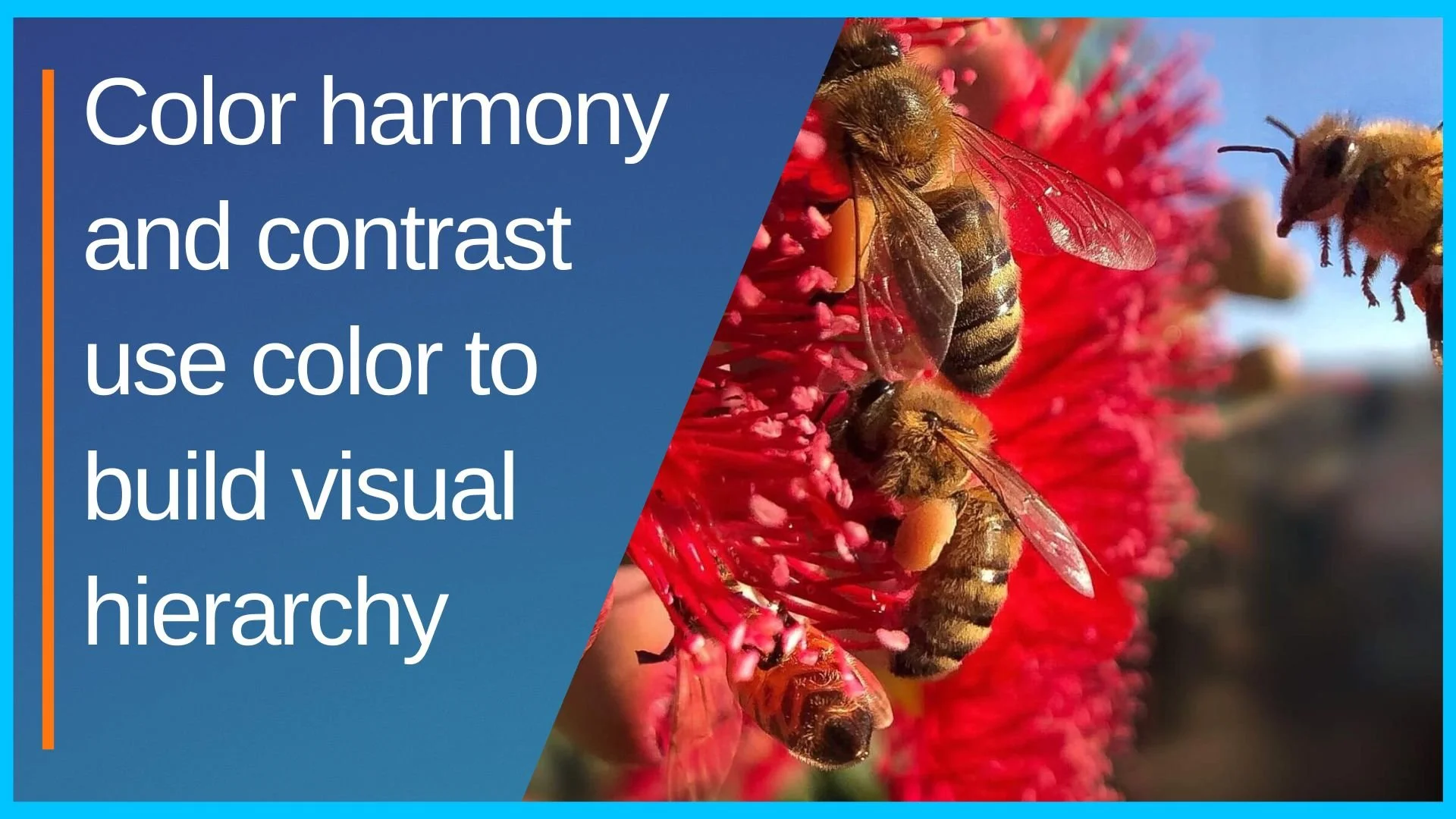
Color harmony and contrast use color to build visual hierarchy
Color isn’t just decoration — it’s direction. By using harmony and contrast intentionally, you can build structure, create focus, and guide your viewer’s eye through the photo.

Monochromatic color - highlight shape, texture, and light
Limiting your photo to one dominant color — or subtle tones of the same hue — shifts the focus. It brings out texture, shape, and light in ways a full-color image can’t.

Figure to ground - make your subject stand out clearly
The figure to ground principle helps your subject stand out from its background. With stronger contrast and separation, your photos become clearer, more intentional, and easier to understand at a glance.

Orientation and aspect ratio — shape your frame with intention
The shape and direction of your frame changes how your image feels. Learn how to use portrait or landscape orientation — and adjust aspect ratio — to suit your subject, simplify your scene, and strengthen your composition.

Left to right — composing with natural visual flow
In Western cultures, we read images from left to right. Use this natural viewing habit to guide the eye and tell stronger stories. This post shows you how to direct attention using layout and movement.

Focal point — how to anchor your viewer’s attention
Every photo needs a visual anchor—something for the eye to land on first. That’s your focal point. Discover how to create one using light, contrast, and composition that works naturally with your smartphone camera.

How lens compression brings the background closer
Lens compression makes background elements appear closer to your subject, changing how space and depth feel in your photos. It’s a subtle but powerful technique that can help you create cleaner, more dramatic, and more professional-looking images — even on your phone.

Fill the frame — for impact, energy, and clarity
Zoom in. Move closer. Crop tight. Filling the frame eliminates distractions and draws attention to what matters. Learn how to use this technique to create bold, focused images full of energy and clarity.

Isolation — making your subject stand out
Isolation is all about focus—visually and emotionally. By separating your subject from the background using light, focus, or composition, you create images with clarity and impact. Learn how to use this powerful technique to guide attention and strengthen your smartphone shots.

Mastering perspective distortion in smartphone photography
Perspective distortion makes close objects look oversized and distant ones look tiny. It’s geometry in action—and it can make or break your photos. Discover how to manage it with positioning, angles, and simple smartphone techniques.

Symmetry - how balance brings visual harmony
Symmetry instantly makes your photos feel balanced, calm, and complete. Whether it’s perfect reflections or structured architecture, this technique taps into our brain’s love of order. Here’s how to spot, shoot, and occasionally break symmetry for even stronger results.

Layering - how to build depth and visual richness
Layering gives your photos a sense of space and immersion by arranging elements at different depths. It’s a simple shift that can make your images feel more professional, dimensional, and story-rich. Learn to layer like a pro.

Foreground interest - lead the viewer into the scene
Want to add instant depth to your photos? Try foreground interest. By including something close to the camera, you draw the viewer into your scene and guide their eye. Learn how to find and frame the perfect foreground.